Paul Ovenden: From Journalist to Downing Street Strategist
Discover his education, journalism career, Labour Party roles, Downing Street work, political ideas and departure from government.

Introduction
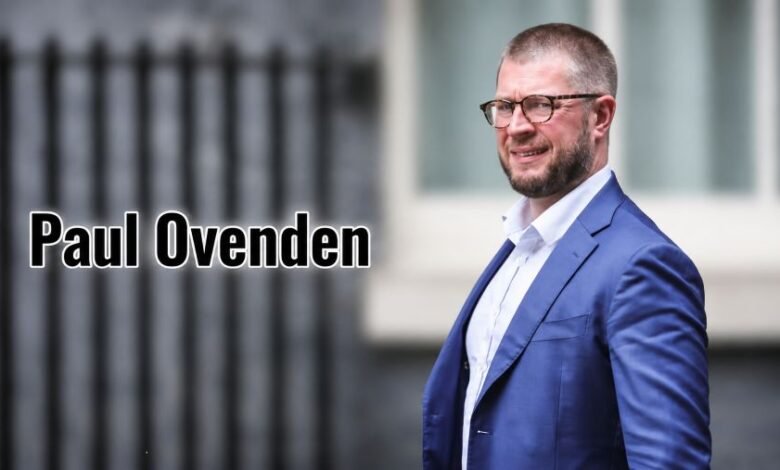
Paul Ovenden is a British political strategist, communications adviser, former newspaper journalist and political writer. He became widely known through his senior work for the Labour Party and Prime Minister Sir Keir Starmer.
He helped shape political messages, election attacks, speeches and media strategy before serving as Downing Street’s head of political strategy. His government career ended in September 2025, but he later returned to public debate through political articles and interviews.
Ovenden is best known as a former senior Labour strategist who worked inside Keir Starmer’s opposition team and government.
Paul Ovenden Quick Profile
| Information | Details |
|---|---|
| Full Name | Paul Ovenden |
| Gender | Male |
| Nationality | British |
| Profession | Political strategist, communications adviser and writer |
| Former Profession | Newspaper journalist |
| Known For | Senior political strategy work for Keir Starmer |
| Education | BA in English and History |
| University | University of Southampton |
| Political Association | Labour Party |
| Former Government Role | Head of Political Strategy at 10 Downing Street |
| Government Service | July 2024 to September 2025 |
| Former Labour Role | Deputy Director of Communications |
| Specialist Area | Political messaging, attack and rebuttal |
| Career Status | Political writer and commentator |
Who Is Paul Ovenden?
Paul Ovenden is a former senior adviser who worked behind the scenes in British politics. Unlike an elected MP, his influence came through planning, communications and political strategy.
He became part of Keir Starmer’s trusted team and helped Labour communicate its policies to voters. His work covered speeches, media responses, political research and election planning.
Readers interested in other British political figures can explore the site’s dedicated political section.
Ovenden’s career also reflects the close connection between journalism and politics. His understanding of newspapers and newsrooms helped him develop messages designed to attract public and media attention.
Education and Academic Background
Paul Ovenden studied at the University of Southampton, where he completed a BA combining English and History.
University material identifies him as a student of the English and History programme. It also includes a positive comment from him about the quality of teaching, academic discussion and learning resources.
Studying English may have supported his later work in writing, speeches and communications. History may also have helped him understand political movements, institutions and the development of British public life.
No reliable public record reviewed for this article confirms his school education, graduation year, academic awards or postgraduate qualifications.
Early Career in Journalism and Communications
Before becoming a leading political adviser, Ovenden worked in journalism and professional communications.
He has been described as a former newspaper journalist with experience at the Sunday Telegraph. Reports have also connected him with earlier work at Sky Sports and the NSPCC.
Working in journalism gave him practical knowledge of deadlines, headlines and the type of information reporters require. These skills later became valuable when he entered political communications.
His background places him among the many journalists and media professionals who moved into wider public-facing roles.
Ovenden also wrote political opinion pieces. His articles examined Labour’s internal culture, election performance and relationship with working voters.
Joining the Labour Party Press Team
Ovenden joined Labour’s press operation in 2014.
As a press officer, he helped manage communication between the party and the media. This involved responding to journalists, preparing political messages and supporting Labour’s public presentation.
He worked at Labour headquarters during a period of major change within the party. Jeremy Corbyn became Labour leader in 2015, bringing a new leadership team and political direction.
Ovenden later left Labour headquarters during the Corbyn leadership period. He continued working in communications, including roles connected with iNHouse Communications and M&C Saatchi.
This time outside party headquarters allowed him to maintain experience in political messaging while developing a wider professional background.
Return Under Keir Starmer
Keir Starmer became Labour leader in April 2020. Soon afterwards, Ovenden returned to a senior position within the leader’s office.
He was appointed deputy director of communications. In this role, he worked alongside communications staff, policy advisers, campaign planners and Starmer’s senior leadership team.
The appointment placed him close to the centre of Labour’s rebuilding project following its heavy defeat in the 2019 general election.
Ovenden left his full-time deputy communications position in 2021 for reported family reasons. However, he later continued contributing to the wider political operation.
His work reportedly included speechwriting, policy advice and preparation for Prime Minister’s Questions.
Attack and Rebuttal Role
Ovenden eventually became a leading figure in Labour’s attack-and-rebuttal operation.
Attack work involves examining the record, statements and decisions of political opponents. Rebuttal work focuses on answering criticism and defending a party or leader against damaging claims.
Sky News described him as the person responsible for finding stories that could damage Conservative opponents while also defending Starmer from political and personal attacks.
The role required careful research, quick decision-making and a strong understanding of the news cycle.
Ovenden’s journalism background was particularly useful because he understood how political stories could move from internal research to national media coverage.
Work During the 2024 General Election
Paul Ovenden played an important strategic role in Labour’s 2024 general-election campaign.
He led work designed to highlight Conservative controversies, political weaknesses and failures in government. The Guardian reported that his operation helped place more than 150 stories concerning Conservative conduct and disputes.
This activity formed one part of Labour’s wider election strategy. The campaign also focused on economic stability, public services, political change and rebuilding trust after years of Conservative government.
Labour won the election with a large parliamentary majority. The victory returned the party to power after 14 years in opposition.
Ovenden was among the advisers whose work behind the scenes contributed to Labour’s media and campaign operation.
British Blog also covers public figures and influential careers from politics, sport, journalism, entertainment and business.
Downing Street Political Strategy Role
Following Labour’s election victory in July 2024, Ovenden entered 10 Downing Street as a senior political adviser.
He served as Director or Head of Political Strategy. The position placed him inside the prime minister’s central political team.
His responsibilities included studying voter attitudes, developing political narratives and advising on how government decisions should be explained to the public.
He also contributed to speeches and long-term political planning. Government transparency records connected him with discussions about the prime minister’s Labour Party conference speech.
Ovenden initially worked in the political operation alongside Morgan McSweeney. After McSweeney became Downing Street chief of staff, Ovenden held greater responsibility for political strategy.
Government Salary
The government publicly releases salary bands for highly paid special advisers.
The official Cabinet Office special-adviser data placed Paul Ovenden in pay band four during 2025.
His reported government salary range was £115,000 to £119,999 per year.
This figure represented his official salary while serving as a government special adviser. It should not be treated as an estimate of his present income, personal wealth or net worth.
No dependable public evidence confirms his current earnings, assets, investments or total net worth.
Political Ideas and Strategic Approach
Ovenden has been linked with Labour’s moderate and communitarian political tradition. Some commentators have also associated his ideas with Blue Labour.
His political approach placed importance on working voters, national pride, economic security and strong public services.
He argued that Labour needed to speak to people who felt ignored by professional politics. This included voters concerned about migration, living standards, wages and the condition of local communities.
His strategic style combined practical election campaigning with a wider interest in Britain’s national direction.
Leadership readers may also explore the site’s collection of business and leadership profiles, which examines how prominent figures build influence across major institutions.
Views on the Stakeholder State
After leaving Downing Street, Ovenden became a more visible political commentator.
In early 2026, he argued that government could become distracted by what he described as the “stakeholder state.” He used the term for a network of regulators, campaign organisations, trade bodies, lawyers and other influential groups.
According to his argument, these groups can consume government time and move attention away from the concerns of ordinary voters.
His comments created debate across British politics. Some agreed that elected governments struggle to control Whitehall and outside organisations.
Others argued that ministers must accept responsibility for their own decisions instead of blaming institutions, civil servants or campaign groups.
Writing About Britain’s Future
Ovenden’s later writing focused on Britain’s economic weakness, limited state capacity and reduced influence in world affairs.
He wrote about national renewal, stronger defence, economic independence and the need for government to make difficult long-term decisions.
A New Statesman cover article used Charles de Gaulle and French national renewal as a starting point for discussing Britain’s future.
In another article, he argued that international conflict had exposed Britain’s dependence on other countries and financial systems.
These articles showed a move from daily political communications towards broader writing about history, leadership and national strategy.
The combination of politics, media and institutional power can also be seen in Evangelos Marinakis’s media and leadership career, although the two figures work in very different fields.
Resignation and Diane Abbott Messages
Paul Ovenden resigned from Downing Street on 15 September 2025.
The resignation followed an ITV News investigation into internal Labour messages written in 2017.
The messages concerned Labour MP Diane Abbott and included offensive sexual remarks from a private workplace discussion.
Ovenden apologised and said he was deeply sorry for the conversation and the hurt it could cause. He also said he had previously considered leaving government but brought his departure forward to avoid distracting from its work.
Downing Street described the comments as unacceptable. Abbott also criticised the discussion and the treatment she had experienced during her political career.
The incident became the biggest public controversy connected with Ovenden and ended his formal role inside Number 10.
Public Image
Ovenden built a reputation as a direct and experienced political operator.
Professional profiles described him as someone who understood journalists and knew what media organisations needed from political communication teams.
Supporters viewed him as an effective strategist who helped improve Labour’s campaigning and prepare the party for government.
Critics associated him with aggressive opposition research, negative campaigning and the offensive historical messages that led to his resignation.
His public image is therefore mixed. His political skills gained respect within parts of Labour, while his departure created serious criticism and public debate.
Personal Life
Ovenden has generally kept his personal life separate from his political career.
Public reporting indicates that he has a family and children. His 2021 departure from a full-time Labour communications role was reported as being for family rather than political reasons.
The names, ages and private lives of his children are not included because they are not necessary for understanding his public career.
Reliable sources do not provide enough verified information about his birth date, age, birthplace, parents, siblings, height, weight or other physical details.
Claims about these subjects should not be added without strong public evidence.
Current Status
As of June 2026, Paul Ovenden is no longer a Downing Street adviser.
His visible work since leaving government has centred on writing, political commentary, media interviews and discussions about Britain’s future.
He has contributed articles to publications including The Times and the New Statesman. His recent subjects have included Whitehall, living standards, national sovereignty and political renewal.
His experience inside Labour and Downing Street continues to give his arguments public and media attention.
No officially announced return to government, formal Labour Party appointment or election candidacy has been confirmed.
Major Career Milestones
- Studied English and History at the University of Southampton.
- Worked in journalism and professional communications.
- Joined Labour’s press operation in 2014.
- Returned under Keir Starmer as deputy director of communications in 2020.
- Contributed to speeches, strategy and Prime Minister’s Questions preparation.
- Led important attack-and-rebuttal work before the 2024 election.
- Joined Downing Street following Labour’s general-election victory.
- Served as head of political strategy until September 2025.
- Returned to political writing and public commentary after leaving government.
Interesting Facts About Paul Ovenden
- He studied two subjects, English and History, as part of the same university degree.
- He worked as a newspaper journalist before becoming a senior political adviser.
- His Labour Party experience began years before Keir Starmer became leader.
- He left a senior Labour role in 2021 but later returned to the political operation.
- He specialised in both attacking political opponents and answering attacks against Labour.
- His official government salary was published through Cabinet Office transparency data.
- He later wrote about national renewal and Britain’s position in the world.
- He has described himself publicly as optimistic about the possibility of national improvement.
Frequently Asked Questions
Who is Paul Ovenden?
He is a British political strategist, former journalist and former senior adviser to Keir Starmer.
What is he famous for?
He is known for running Labour’s attack-and-rebuttal work and serving as Downing Street’s head of political strategy.
Where did he study?
He studied English and History at the University of Southampton.
Did he work as a journalist?
Yes. He worked in newspaper journalism before moving into political communications.
When did he join Labour’s press team?
He joined Labour’s press operation in 2014.
What role did he hold under Keir Starmer?
He served as deputy director of communications and later became a senior political strategist.
How much did he earn in government?
Official records placed his annual salary in the £115,000 to £119,999 range during 2025.
Why did he resign from Downing Street?
He resigned after offensive messages from a 2017 Labour workplace conversation became public.
What does he do now?
He writes and speaks about British politics, government, economics and national strategy.
Conclusion
Paul Ovenden rose from journalism and communications to become an influential figure inside Labour’s senior political team.
His work supported Keir Starmer’s leadership, Labour’s 2024 election campaign and the party’s move into government. He later became responsible for political strategy at the centre of Downing Street.
His government career ended after the publication of offensive historical messages, creating a major controversy around his record.
Since leaving Number 10, he has continued contributing to British political debate through writing and public commentary about government performance, economic security and national renewal.